
The hottest film in China this summer is not The Odyssey, despite the hoopla around the China promo tour the team went on and the subsequent drama with one of the Nolan interviewers, Zhong Shu.
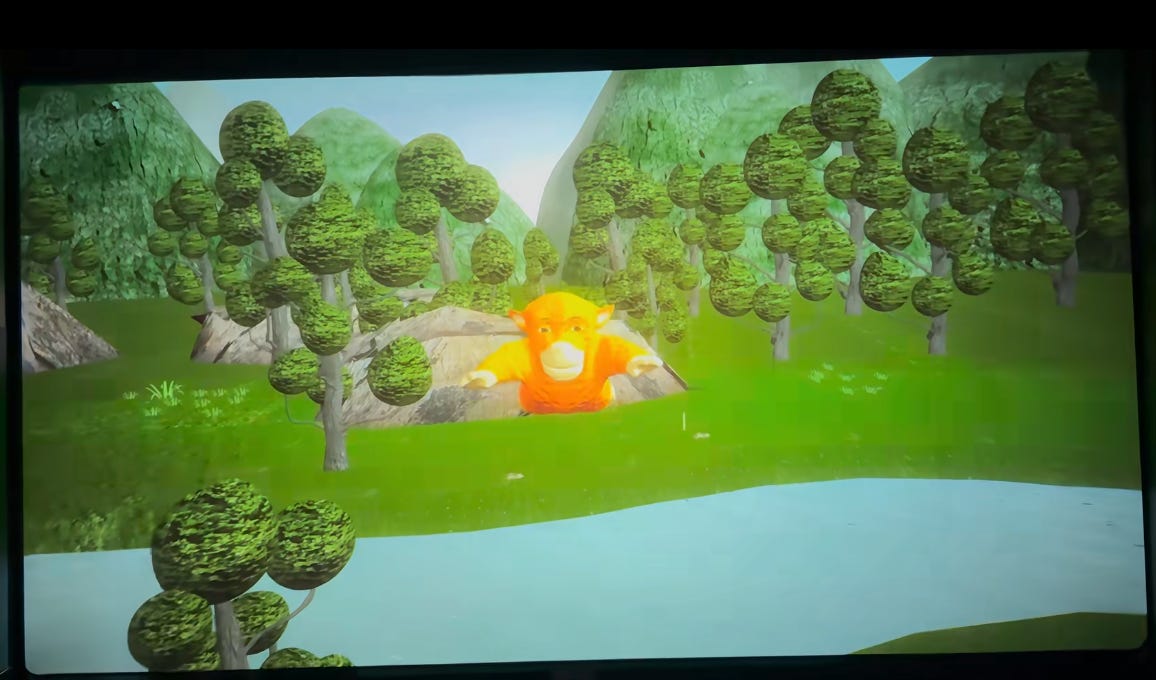
The dark horse of the summer blockbuster season is Niu Lai, a film made on a budget of a few thousand dollars by a two-person team, which got onto China’s big screen with almost no market interest until it became a cult favorite for how bad it is.
My theory
Niu Lai‘s success is the anti-AI-slop version of the “little guy who made it” overnight success story. It’s bad and juvenile but it is “manual crafted” (手搓). It’s a story of the little guy making it — a mother-and-son team driven by a deep conviction to bring a story they cared about to the big screen. Or at least that is the story we want to believe. Niu Lai’s film aesthetic is anachronistic, with a hint of nostalgia, and the nostalgia economy is having its moment.
I wrote about AI and the film industry for Fast Company China this summer. What generative AI actually disrupts is the organizational logic the film industry has run on for as long as Hollywood existed: who is qualified to make a film, the industry’s power dynamics, and what confers legitimacy and the right to call the shots. But the shock of a visual medium being overturned by technology was predicted a century ago.
In 1936, Walter Benjamin wrote “The Work of Art in the Age of Mechanical Reproduction,” an essay that has had a long reach in modern media theory. He described aura — the irreplaceable tie between a work and its specific time, space, and context. Benjamin saw that reproduction technology would change art. He also saw that media technology would reshape the way people perceive the world.
Benjamin was prescient in predicting how media technology changes content and attention structures. A painting asks for contemplation: a viewer stands in front of a still work, and the attention goes to a static form of beauty. Film demands a different relationship with the viewer because the medium requires a different kind of attention. Cuts, close-ups, camera movement, and editing choices chop up reality. The audience conjures meaning from a montage, intimacy from the close-up, emotion from the rhythm. Film trains the viewer’s eye and taste toward new ways of looking, and art is received while we are distracted by the art itself. That is what Benjamin called reception in a state of distraction.
When AI promises to drive the marginal cost of generating an image to near zero, the industry will (eventually) get used to AI living permanently on set. What compute can’t replace is the creator’s read on human experience, the judgment of emotional rhythm, and the ability to give the moving image meaning beyond the effort it took to make it.
Benjamin defined aura as what gives art its meaning, and argued that mechanical reproduction destroys it. In the case of Niu Lai, reproduction and recreation deepen meaning.
Taboo behaviors and theater etiquette were thrown out the window, and screen recordings of Niu Lai became a force for distribution. The film’s perceived flaws give moviegoers tacit permission to break the rules. It’s not a deliberate attempt to disrespect the creator’s intent — the thing etiquette exists to protect: the integrity of the storyline, the element of surprise. Recording it is a form of paying homage to the meme and to be part of the recreation. All of this creative labor sparks curiosity. Thousands of social media posts are the proof points, and collectively they deepen the meaning beyond the original expression of Niu Lai.
Reproduction doesn’t kill the aura anymore. Here is what the aura of Niu Lai means in 2026: in a society going through seismic change and uncertainty, creating with Neolithic methods—and subcultures of Niu Lai moviegoers dissecting the film’s frames, meaning, and aesthetics—is the new aura.
How I ended up in the theater watching Niu Lai with two teenagers
SCMP reached out before I saw the film. From just reading about Niu Lai and the enormous ripple effect of how much people were talking about it on Red Note and in mainstream media, I knew I wanted to see it. In Shanghai, I bought tickets on the day of, and they were double the price I paid for IMAX Odyssey the weekend before.
I asked two Gen Zs if they were down to see the film, and to my surprise, they were super excited and already knew the online chatter about the film.
Gen Z #1, Ayden: lives in New York and well-versed in meme culture; spent the summer in China hanging out with local kids at a Chinese archery school.
Gen Z #2, George: almost 16, lives in Shanghai, learned about the film from his classmates at a summer cram school, and had watched five minutes of the movie on YouTube.
I interviewed them over hotpot after the movie and recorded their responses.
I found their answers to be exactly why Niu Lai struck a chord in China. Here’s the recap from Ayden and George with minimal polishing for clarity (and connecting the sentences because there were many pauses for chewing), followed by my own observations.
Over hotpot
Why is everyone in China suddenly watching this? It got famous for being bad. What are people actually watching?
Ayden: The movie is supposed to be aimed at kids, but now kids don’t really like watching things with morals. Instead of watching slow-paced movies, they all watch the creepy AI videos on Douyin because they need the dopamine to stimulate themselves. So I think it’s probably aimed at a more mature audience who could, instead of looking at it as a story of morality and growth, just look at it as some funny meme.
George: This is the first time such an absurd (抽象) thing has appeared in a movie that made it into theaters. The picture quality is very poor — is this really a movie made in 2026? Then there are only two directors, and the production team has only two people. And all the stuff going around online. I think everyone may have a sense of novelty about watching a movie like this.
Ayden: The credit list, unlike The Odyssey and other movies, is so short. It’s like two people. (laughs in unison)
How did you first hear about it?
George: My classmates told me. They saw it scrolling on WeChat. They told me how bad it was, and that when Niu Lai came out, the box office was tiny. And then it was, like, people wanted to go see it. Once that news broke, the next day the box office started going up. Everyone just wanted to see how bad it actually is.
Do you think we’re in a new zeitgeist where people want to root for the little guy?
Ayden: I noticed that— (chewing pause; the hotpot is ready) People tend to like— (never finishes the thought, too busy eating)
George: It just makes you laugh. I think this movie is very pure (纯粹).
Ayden: I don’t think it was for that purpose.
George: I know, but it’s viral because it is.
Ivy: It doesn’t try to be pure. Because the moment you try to be pure, the vibe is just wrong.
George + Ayden: *nod in agreement*
Ivy: What’s the translation of 纯粹? I think the most direct translation is probably unadulterated. Something that has not been tainted and is natural.
George: It’s also just that there’s a real gap between this and what a 2026 film is supposed to look like.
Ayden: It also feels low-effort. The setting keeps changing, and the size of the bird went from as big as the mommy cow’s head to the size of her fingernail.
Ivy: But did you like that? Because AI makes everything so perfect, so the imperfection becomes very authentic? (is this a leading question :D oh well.)
Ayden: Yeah. It’s funnier now that it’s 2026. We are used to everything being well done and perfect, everything perfectly shot with great graphics. When something bad like this comes along, it’s funny because it’s like an outlier.
Ivy: How do we feel about outliers?
Ayden: I feel like this movie wasn’t meant to be an outlier, just a mother and son with a small budget trying to make a movie to teach kids a lesson. But this movie would have attracted more kids a decade ago, because at that time kids watched more movies with a constant pace instead of swiping short videos. (Ivy: it’s hilarious this is coming from a 13 year old)
What stood out to you in the plot? What do you think the plot is about? (spoilers ahead)
George: The jumping off the cliff. In the beginning, [Niu Lai] was scared to even jump over the small river. But to protect the herd, he jumped. It’s a form of growth.
Ayden: But did he really, because it was all just a dream?
Ivy: What’s Baola’s role — the leopard cub? Is he real?
Ayden: We don’t know.
George: Baola is loyalty.
Ayden: All the characters represent something, and the journey to grow up. When the dogs come, Baola shows up and [it shows] friends are important and we defend each other. Can I have the meatballs?
Ivy: I like how Ayden called the dogs Temu Cerberus when we were watching. Why were there three dogs?
George: They represent three different personalities.
Ayden: I’m not sure.
Ivy: What about the “monster” at the end that looks like something out of Minecraft?
Ayden: Maybe the message is that technology destroys nature… It’s a car running over the cows.
George: But also that Niu Lai overcame his fear.
Ivy: What was his fear in the first place though?
Ayden: Making jumps.
Ivy: What does making jumps symbolize? (I was either getting into my Freudian mode or really getting into my inner middle school teacher persona)
Ayden: He’s fearful and stays by his mom’s side, but he also can’t help wandering off.
Why did you want to see it?
Ivy: I think the recreations give the movie a deeper meaning.
George: Yeah, but no one went to the movie to see a good movie. If they want to see a good film, they can see Spider-Man. It’s driven by curiosity (猎奇), more than anything.
Ayden: Because it seems unique. Spider-Man is well done, I saw it. With Niu Lai you just want something different, to see something bad.
Ivy: What does bad mean to you in 2026?
Ayden: Graphics are bad.
Ivy: Would you recommend this to your friends?
George: Yes, of course I would recommend this movie to my friends, since in today’s fast-paced, high-pressure society, people really need movies like this to receive “pure” happiness. One of my friends told me that Niu Lai was great. He went into the theater with his father, and his father couldn’t stop laughing at the movie, even though normally his father is a very strict and boring person. Watching movies like The Odyssey makes you think about what the story is conveying, which deviates from what movies were meant to be. From my perspective, movies are created to entertain people, and Niu Lai — even if it was maybe never meant to make people laugh — is a movie that entertains people.
(Can I call it that the kids are alright?)
My observations
We got to the theater close to 25 minutes after the movie began. We watched the screen-recorded movie on YouTube in the back of our Didi.
We settled into a theater that was about half full on a Wednesday. About half an hour in, a child in a family a few rows to the right of us yelled out that the film is so bad, in a Henan accent, followed by one of her parents’ loud ringtones and picking up to have a conversation about the movie.
The two people sitting behind me, who had been chitchatting and trading punchlines at audible volume, immediately jumped to judgment — was it the Henan accent, I thought to myself, that gave them a sense of superiority? It was clear that the folks behind me had done their research and knew about the hype, which is why we were all there. The Henan family of three left shortly after, probably unwilling to endure a slow-paced, dopamine-lacking film that only made sense if judged by avant-garde cinematic standards.
The closest thing I can compare the sound effects of Niu Lai to is a rough brush scraped against a concrete floor, standing in for hooves clopping.
I can’t help comparing it to The Odyssey’s music score, which to me never stops being climactic, directing the viewers to feel exactly how we should feel — surging and anxious. Niu Lai barely has a music score; the songs were written by the mother, an amateur composer who learned to do it for the movie, and one I swear was the intro to Vivaldi’s La Primavera for at least two seconds. The pauses that come from the lack of sound direction are at times uncanny; I couldn’t tell whether the emptiness was there to linger unintentionally or to give the viewer a respite to think. The empty shots of the landscape, a moment to just sit with the void. Voices that take their time, a tad too slow to match the imagery on the screen. The tempo is insanely slow.
The two teenagers who are natives in the attention economy sat through all of it and preferred it to Christopher Nolan’s take on a hero’s journey.
When we saw Odyssey the weekend before, coming out of the theater after three hours absorbing Nolan’s ideologies, Gen Z Ayden’s biggest complaint was that the film cut Nobody out of the Cyclops episode — in the original, Odysseus told the Cyclops his name is Nobody, so when the blinded giant howled for help, the other Cyclopes hear that nobody is hurting him and went back to sleep. It is the oldest trick in the hero’s journey.
Niu Lai is a nobody: no budget, no poster, no crew, no grand vision to redefine film as a genre, and none of the hubris to rewrite Greek history to reinforce an ideology. It got out of the cave, and that makes it a hero. One of the best lines in the movie is what Niu Lai’s mother tells him when he is too scared to jump: today is the future of yesterday. We don’t know what tomorrow holds, but maybe today we just want a simple laugh and a reason to stop scrolling and go to the theater to root to be part of the journey.


Interviewed at a hot pot place serving beef ;) Poetic justice
Now I rlly wanna watch it!