Last but not least, Trust Moves, breaking down and analyzing a Pony.ai interview.
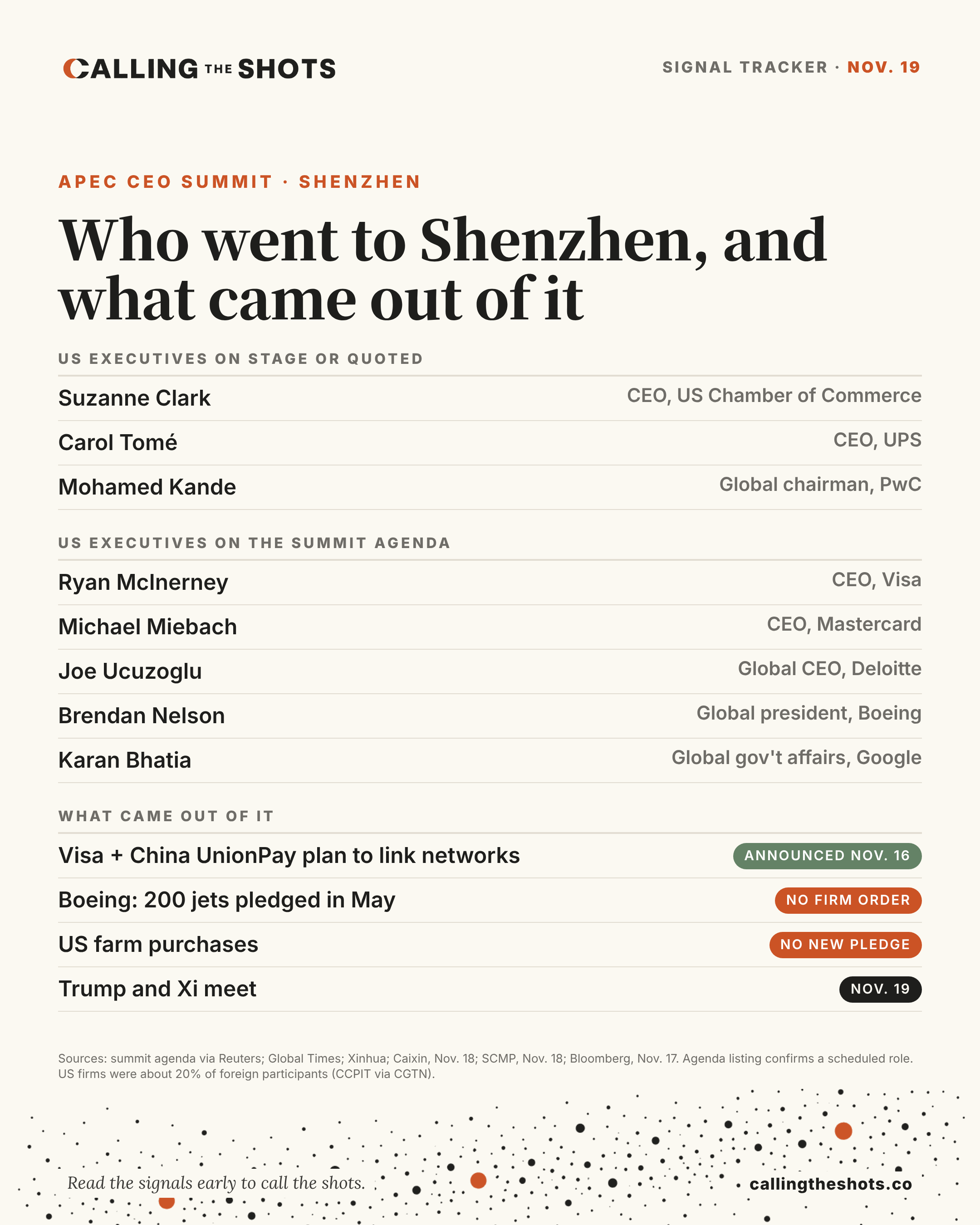
Shenzhen becomes China’s miracle city, and US CEOs went to see it
Why it matters: If your company does business in China, whether you showed up this week is now public. Your board, your customers, and Beijing will each reach different conclusions.
Calling the shot: This week locked in Shenzhen’s reputation as China’s miracle city. More US executives will now try to go, with questions to answer and resources to find. Visa’s CEO came with a deal in hand. Companies will have to tread carefully around the narrative of opportunity and risk in potential partnerships and suppliers.
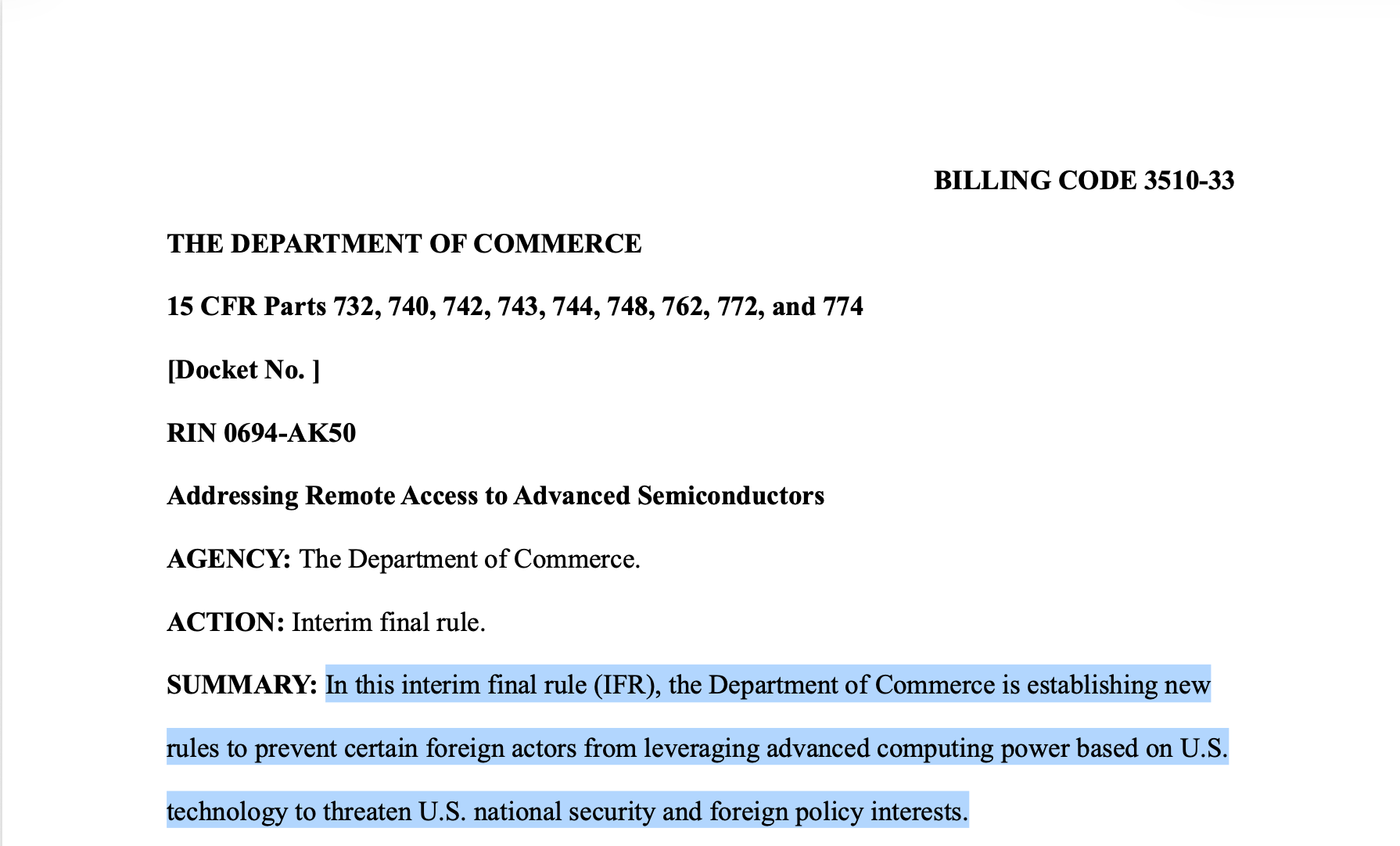
Commerce now licenses who rents the chip, as well as who buys it
Why it matters: Chipmakers, cloud companies and the banks that lent to data centers in Southeast Asia now have to know the end customer.
What happened: The Commerce Department’s BIS, the office that controls exports, issued a new rule on Nov. 16 requiring a license to ship advanced AI chips to Singapore, Malaysia, Thailand, Indonesia, or Brazil. Any data center that rents large amounts of computing power to companies based in China now needs a license too. Data centers run by US-headquartered companies are exempt if they file monthly reports with Commerce. Banks and private credit funds lent billions to data centers in the region that could now lose Chinese tenants. China’s Commerce Ministry said it “firmly opposes” the rule and promised countermeasures.
Calling the shot: The reputation risk just moved to the lenders. Microsoft, Oracle and Amazon can use the exemption. Smaller companies that rent out AI chips cannot, and neither can the funds that lent to them. The rule takes effect while Trump and Xi are in the same city, so watch whether it survives the Jan. 10 end of their trade truce.
Nvidia writes China out of its forecast as Jensen Huang leads with his citizenship in his first public statement
Why it matters: The company at the center of the chip fight now expects no China data-center sales. Its former CEO is asking for his job back by vouching for his U.S. loyalty. The board said no.
The same day, Huang, who resigned Nov. 11, posted on X that becoming an American citizen “is one of the greatest gifts and proudest moments of my life.” He said he would be “honored to answer these calls and return as CEO” if the board decides that serves shareholders, employees, the company “and America.” Hours later, on the earnings call, board chair Harvey Jones said the board “does not intend to reinstate Jensen as CEO,” and Kress told investors “we’ve got this.” Three House committees say Huang will appear before them Dec. 1.
Calling the shot: Asian American leaders have spent years pushing back on the idea that they have to prove they are American enough. The Justice Department’s China Initiative charged Chinese American academics in cases that often fell apart. DOJ ended it in 2022, conceding it had fed a perception of racial profiling. In 2024, Sen. Tom Cotton asked TikTok CEO Shou Chew whether he had ever joined the Chinese Communist Party. Chew answered in disbelief, “Senator, I’m Singaporean.” In 2025, Intel CEO Lip-Bu Tan answered Trump’s call for him to resign by opening his letter to employees with his love for the country. The Asian American Journalists Association called out The Economist’s tagline “Two Huangs don’t make a right” and the New York Post’s front page “HUANG HUANG BANG BANG,” writing that “a person’s background or national origin should never be used to presume loyalties.” Huang, who came to the US 53 years ago, now leads with his citizenship before anyone asks. The next Asian American CEO in a crisis will be expected to do it too.
Huawei’s racketeering case goes to a Brooklyn jury
Why it matters: A conviction in the largest US criminal case against a Chinese company would send every US firm that dealt with Huawei back to its files.
When Justice Department lawyer Taylor Stout opened Huawei’s trial in Brooklyn on September 9 with “theft, lies, cover-up,” he was going for the headlines. The current trial is a continuation of the original indictment that began in 2018, when the United States charged Huawei and its chief financial officer, Meng Wanzhou.
What happened:Closing arguments in the federal trial of Huawei Technologies ended Nov. 17 in Brooklyn, and jurors were due to start deliberating Nov. 18. Huawei and three affiliates face 12 counts, including racketeering conspiracy, trade-secret theft and fraud tied to Iran sanctions. Assistant US Attorney Meredith Arfa said Huawei grew by “committing crime after crime.” Defense lawyer Brian Heberlig said prosecutors “began with guilt and worked backward.”
Calling the shot: A racketeering verdict would turn years of ordinary business with Huawei into evidence of a criminal enterprise. General counsels should study that theory whatever the jury decides. US banks and carriers with past Huawei ties will hear from their own boards first. Also I’m thinking about with more limitations access Nvidia chips, will Huawei’s role in China become more important? Very little coverage of the case in Chinese language coverage.
The FDA says no to a Chinese cancer drug, and China says yes to Lilly
Why it matters: US biotechs that license Chinese drugs, and US drugmakers selling into China, now face regulators who judge on the data first.
What happened: The Food and Drug Administration rejected ivonescimab, a lung-cancer drug that Miami-based Summit Therapeutics licensed from China’s Akeso. Summit fell about 18% before the market opened Nov. 16, and Akeso fell 23% in Hong Kong. The same week, Eli Lilly’s China unit said its weight-loss pill orforglipron became the first oral drug of its kind approved in China for weight management.
Calling the shot: Investors will now price every drug licensed from China on whether its trials meet US standards. That favors big drugmakers that can pay for those trials over smaller licensors. Summit’s next trial results, due around year-end, will show whether this was one drug’s setback or a discount on the whole category. Read Ruby Wang’s new book China Cure which goes into these topics in details and in enlightening ways.
Trust Moves - A missed opportunity to build it
Pony.ai is a Chinese robotaxi company listed on Nasdaq, backed by Toyota and partnered with Uber, which makes it one of the few Chinese AI companies US investors can buy directly.
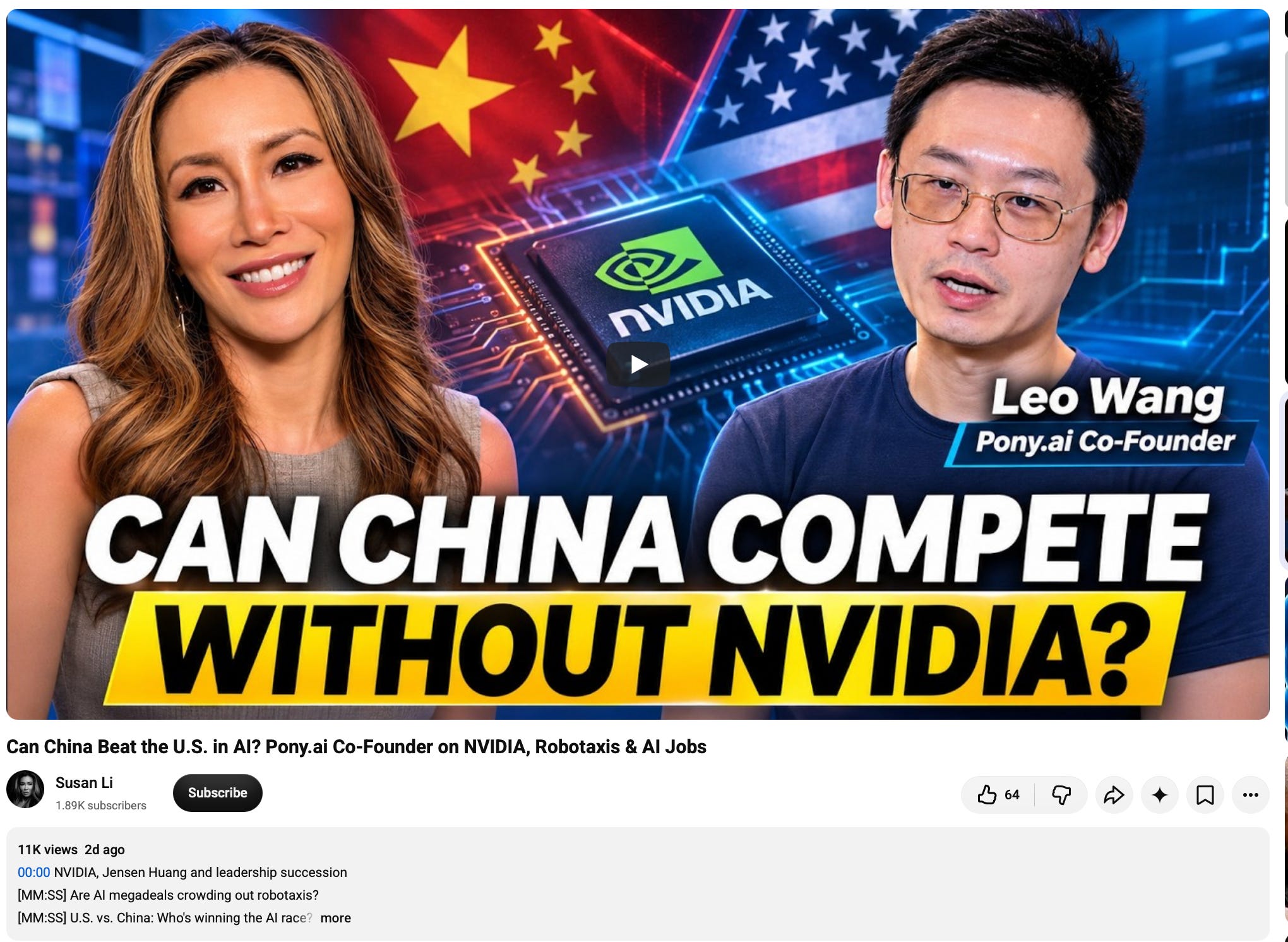
Its co-founder and CFO, Leo Wang, sat for 26 minutes at Web Summit with Fox Business correspondent Susan Li, and there were a few problems with it:
Interview was posted Nov. 16 on interviewer’s own YouTube channel, not Fox News.
Wang took questions on Nvidia’s leadership, the Anthropic IPO, his share price, and whether AI is dangerous.
Asked how Pony.ai gets Nvidia chips, he said which kind instead: “we are not using the leading ones.” A day earlier, he said the company’s demand for computing power far exceeds supply.
Calling the shot: The interview did not build trust. Telling investors the company runs on mid-tier chips raises the question of whether it can keep innovating, and Pony.ai answered questions about Nvidia and Jensen Huang without qualifying his answers and tried to compare how Pony.ai is is not just about one person like Nvidia. A company in Pony.ai’s position had little to gain from a long-form interview where any question is fair game. For investors in US-listed Chinese AI companies, which chips they use and where they rent them is now a disclosure question, and to opine on a fast moving news story is difficult to tackle. It’s absolutely fine to just not answer and pivot the question.
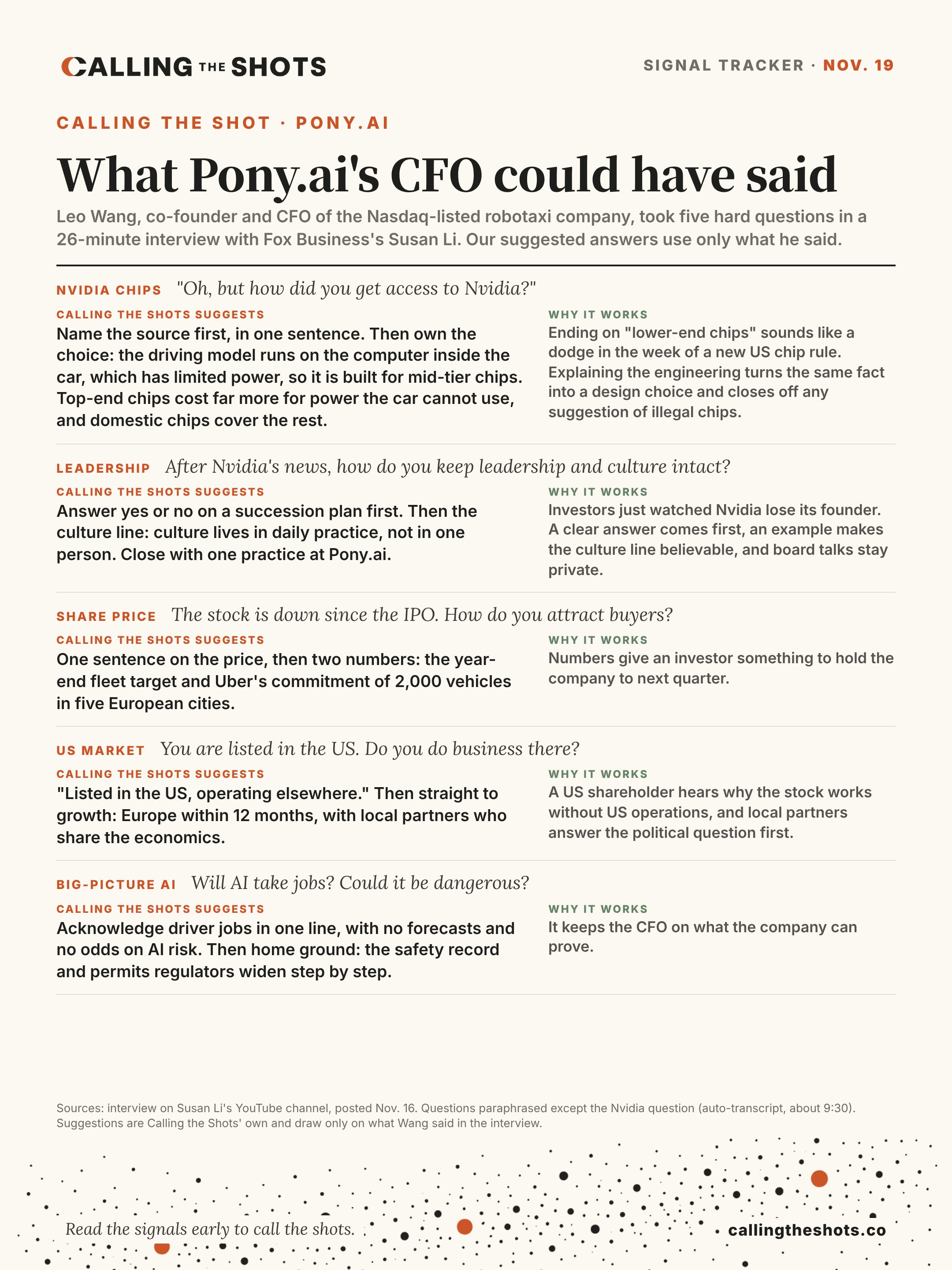
CTS did a full analysis on some of the Qs asked, and how Pony.ai could have answered:
Pass it on
If you know someone who handles the internal and stakeholder storytelling when a China story breaks, forward this to them. And if this week landed on your desk, reply and tell me how. I read every one.
CTS Signal Tracker is a weekly briefing that breaks down China stories that need actions
Ivy Yang is the founder of Wavelet Strategy (waveletnyc.com) and writes Calling the Shots (callingtheshots.co). Read the signals early to call the shots.