


Key takeaways
Kimi K3.1 Pro made news for the wrong reason: Kimi tried to control creator messaging, and it backfired. Earning trust takes dropping the transactional mindset altogether.
Creators with better options negotiate for more than a one-off post, help build the trust ecosystem, and act less like rented ad space.
OpenAI, Anthropic and a16z are building ambassador pipelines from campus to the workplace. New Media strategy is here to stay, and it takes months and patience, and that is what the Kimis are competing against.
What happened after the backlash
It all began when this week the creator Elshayib posted screenshots of what appears to be a promotional brief for Kimi K3.1 Pro.
Kimi wanted to review content before creators post and asked them to “Please DO NOT put on the paid partnership label.”


Two days later, Kimi apologized publicly. But not what for what blew up in the first place. Kimi said sorry for rate limits and unnecessary quota consumption and ignored the influencer-promotion allegations that made people question the launch. Kimi’s October 25 statement:
“We’re sorry for the rate limits and unnecessary quota consumption on the K3.1 Pro subscription plan. These were our issues, and we should have fixed them sooner.”
X influencers noticed the dodge.


Kimi has earned serious technical interest. K3.1 Pro placed fourth on Artificial Analysis’s Intelligence Index, ahead of OpenAI’s GPT-6 Astra and Xiaomi’s MiMo-V2.6-Pro.
The model is probably fine, but the diffusion of trust works in wondrous ways, and once out of the bag, it’s difficult to contain. I’d argue this whole fiasco is partly because Kimi needs to control the narrative. Lost trust can stop people from ever trying it, and it makes publicly rejecting Kimi the correct virtue signaling.
Why a pay-per-post brief misses the negotiating power
Zichen Wang Wrote a great piece on how Kimi took a very Chinese PR and KOL buying model and ran it in the U.S. It’s not hard to understand why Kimi did it: promotion is a deliverable—give me a tweet, a repost, or an Instagram post, and I’ll pay you for it. And if I pay you for it, I get to review and revise. This is an established influencer marketing workflow in China, and Kimi didn't invent it.
The trap for Chinese AI companies entering a new community is assuming quantity >quality. Enough purchased posts and that “momentum” will win over the people whose judgment they most want attached to the brand. Creators with existing audiences and offers from other AI companies are the most coveted, and they are in the driver’s seat to negotiate the whole relationship.
On creator marketplaces, small AI and developer accounts ask around $120 for an X repost, $250 to $400 for a sponsored post and $300 to $550 for a thread. They are renting out their feeds like ad space.
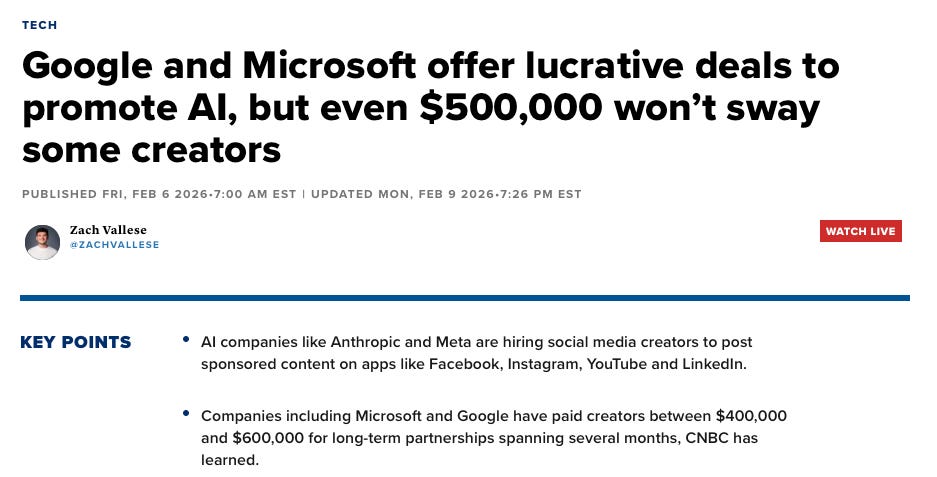
High-profile work is priced differently. One tech creator with nearly 400,000 followers across platforms told CNBC her sponsored deals typically run $5,000 to $30,000 per campaign. Google and Microsoft have paid $400,000 to $600,000 for some multi-month creator partnerships. This brings me back to the idea of the alternatively influential.
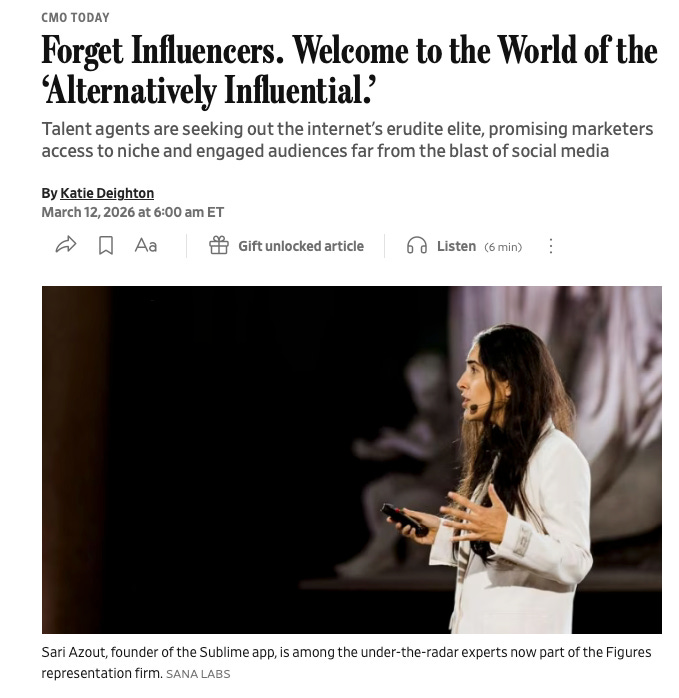
A creator with those alternatives has little reason to accept a tightly controlled, one-off assignment that could cost them credibility. Continued access, support, and future work are what they want, and a transaction-only offer looks thin next to a partner willing to invest over time. The creator economy is real but it’s so much more than a pay-to-play mentality.
A much bigger check doesn’t guarantee a willing partner either. Another creator told CNBC he had turned down a $20,000 AI deal and would refuse $100,000 or $500,000 too. Some audience relationships set a line money doesn’t move.
How U.S. AI players build an influence ecosystem
OpenAI, Anthropic and a16z are building a pipeline that starts on campus and runs into the workplace. None of it was built in a launch cycle.
It starts at school. Anthropic’s Claude Campus pays student ambassadors a published $3,600 stipend to organize campus activity from September 2026 to June 2027. OpenAI’s Student Collective gives campus leads training, staff access, and semester stipends for running workshops.
It continues with power users. OpenAI’s Codex Ambassadors sign up for six renewable months, commit to one community contribution a month, and get credits, office hours and a direct feedback line to OpenAI’s developer-experience team. The role is unpaid, though the perks have value.
a16z New Media goes furthest and treats media as a skill to teach. Its New Media team runs launches for portfolio companies, and its eight-week New Media Fellowship (launched on Substack, mind you) trains storytellers to embed in those companies and leave the skills behind when they go. Founders learn to package their own content and plug into a16z’s distribution, which a year in includes about 1 million followers on X and 250,000 newsletter subscribers. The next step is helping portfolio CEOs build these teams in-house. Everyone in the network becomes an ambassador. Try pricing these new media assets; I doubt they’d repost something for a few hundred bucks.
The difference is time. Each program takes months to ramp up, and the people in it learn the product, build a reputation around it, and keep showing up. The alleged Kimi brief bought a launch week of posts and skipped that ramp-up. Either way, a material connection has to be disclosed.
What Kimi should do next
Pretending nothing happened is the worst option available. The media environment is fragmented: creators, Substackers, and everyone in between are weighing in, and legacy media is now reporting on it. Kimi is no longer just trying to influence the public. It has to influence how all these voices read its actions, and right now they're its most important stakeholder.
Kimi should start with a public apology, on video and on X. The opening could read:
“We wanted this community to see how much care we put into Kimi. We should have trusted you to test it and judge that work for yourselves. Instead, our approach to promotion put control ahead of that trust. That was the wrong strategy. For disappointing you and failing to uphold your trust, I’m sorry.”
The details come after: who issued the instructions, whether they were authorized, how the creator relationships were structured, and which posts need correcting. If an agency was involved, say so precisely once it is verified (but don’t try to shift the entire blame). That attribution is secondary messaging. Leading with it would turn the apology into a defense.
Then Kimi should sit for an interview that allows uncomfortable questions, and follow it with direct, honest contact with Elshayib. He should not have to change his position for Kimi to keep the conversation open. Staying engaged under criticism shows the trust the company says it wants.
Beyond this incident, Kimi needs to give credible people a reason to stay involved: supported testing, regular feedback sessions, and useful community work, with every benefit disclosed. None of it should depend on repeated praise or an obligation to defend the company.
The quota apology shows Kimi can name a concrete problem and fix it. It needs the same specificity on creator promotion if the goal is to become a brand people willingly attach their reputation to after a launch campaign.
Great analysis as always Ivy. In the 55 years I've been a communications practitioner, the need for trust in the messaging one aspect has never changed