
The End of Shein's China Shedding
Shein back to its roots
On the first working day after Lunar New Year, the elusive founder of Shein, Xu Yangtian, made a very public appearance at a conference hosted by the Guangdong Provincial Party Committee.
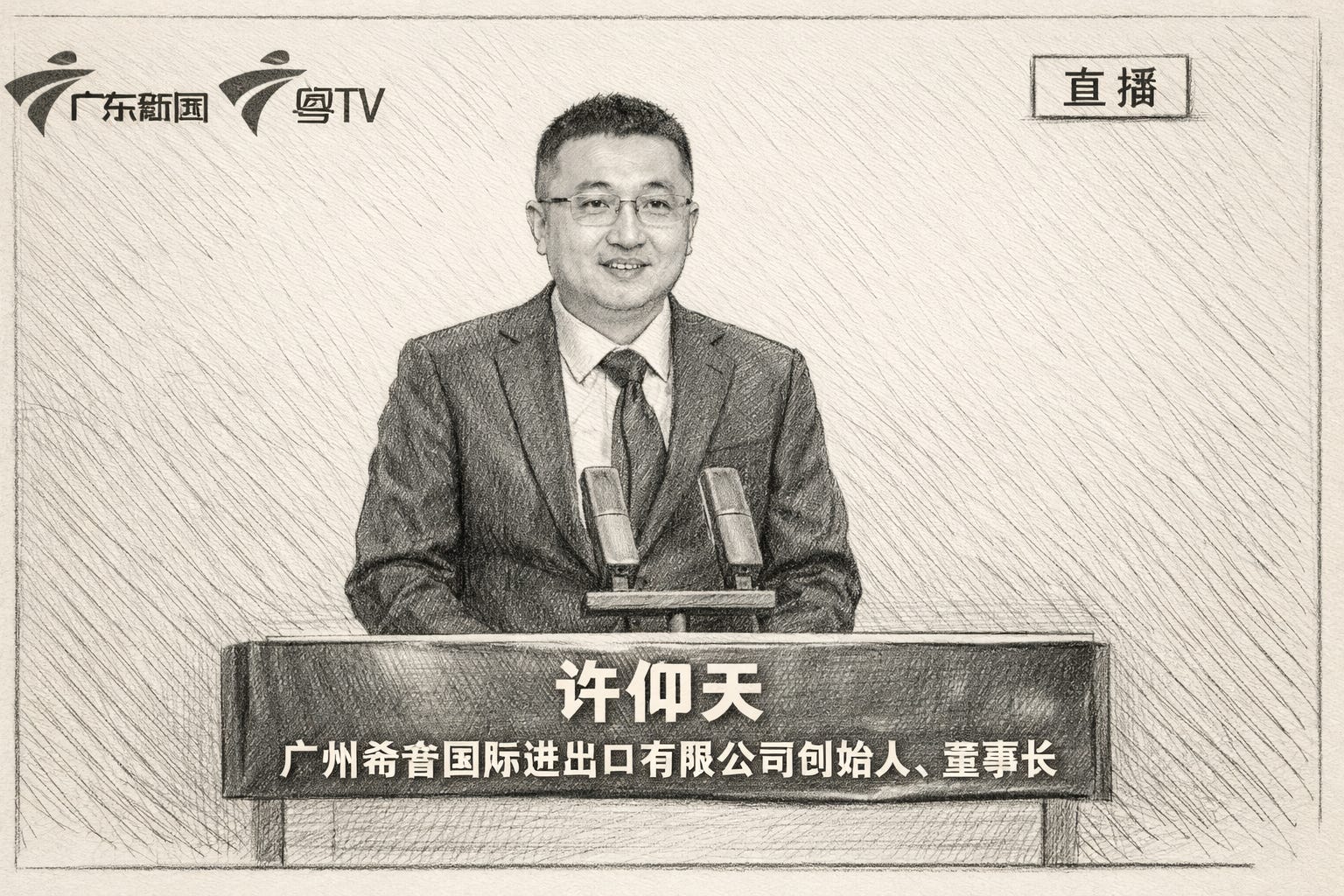
In five livestreamed minutes, he announced a RMB 10 billion investment to build Shein's smart supply-chain system in the province. He closed with a line that, read against the last two years of Shein's global communications strategy, landed like a confession:
“广东是希音的根,也是我们奋斗的起点“
It was a remarkable thing to say because Shein has spent years trying very hard to make the world forget it.
The China-Shedding Years
For anyone who has tracked Shein’s trajectory, the Guangdong speech is the end of a story that was always going to end this way.
In 2022, Shein relocated its headquarters to Singapore and hired its Executive Chairman Donald Tang. Shein cultivated a global brand identity built around fashion, youth culture, and individual expression and adopted language and aesthestics deliberately chosen to feel Western. Donald Tang became the public face of the company’s ambitions in the United States and Europe. When Tang publicly framed Shein through “American values” language in 2024 and later attempted to damage control, FT reported that Shein discouraged China-based columnists from writing about it, adding fuel to fire.
The internal and external narratives were already out of sync and even back then while Shein understood it should not irk officials, but it kept going with its dual narratives. Shein ran two parallel stories, one for Western audiences that positioned it as a global fashion platform unburdened by its Chinese origins, and another for Chinese stakeholders that required a very different kind of reassurance.
It was Shein’s China-shedding strategy: the attempt by Chinese-origin companies to dilute or obscure their identity in order to access Western capital markets, reduce regulatory scrutiny, and sidestep the growing geopolitical cost of being perceived as a Chinese company. Under Donald Tang, Shein became something more specific: a jurisdiction chameleon. American company when pitching to Wall Street. UK company when courting a London listing. A French op-ed when timely. The identity of the moment was always the identity that served the goal of the moment.
Shein’s biggest competitive advantage is not its app, its marketing, or its influencer strategy. It is the Guangdong supply chain: the density of garment factories in Panyu, the logistics infrastructure in Baiyun, the test-and-reorder model (“小单快反”) that compresses design-to-delivery to two or three weeks. That speed is not replicable elsewhere, not at Shein’s price points and not at Shein’s volume. Singapore can host a holding company. It cannot replicate 10,000 partner suppliers and tens of thousands eager workers embedded in one provincial ecosystem.
So the China-shedding strategy was always asking the market to believe something that Shein’s own operations contradicted daily. You cannot be a Singapore-based global fashion platform while depending entirely on a supply chain infrastructure so deeply embedded in one Chinese province.
The IPO process made the contradiction impossible to manage. By late 2024, no amount of PR charm offensive stopped journalists from asking plainly “how Chinese is Shein?” People saw the Singaporization of the company as risk engineering rather than Shein’s genuine identity. This is part of a broader pattern of Chinese-linked firms relocating HQ functions offshore while operational gravity stays in China.
Early 2025 brought more pressure: Tang wrote an investor letter trying to reassure markets after Trump’s crackdown on low-value imports, while Bloomberg and UK press quoted him leaning into language about public trust, accountability, and transparency. That kind of reputation-repair rhetoric typically appears when a company knows scrutiny is coming and hasn’t yet built the credibility to withstand it.
Then came the moment of reckoning. Chinese regulators did not approve the proposed London IPO. Shein pivoted to Hong Kong. Bloomberg and Reuters then reported that Shein was weighing moving its base back from Singapore to China entirely, to ease the path to Beijing’s sign-off.
The dual narrative was beginning to break down. Beijing read the Singaporization and Shein’s external posturing as a loyalty question. Western regulators and investors read the IPO rerouting to Hong Kong as prove that Shein was never global enough to begin with. There was no version of the story that satisfied both sides at once.
What the Guangdong Speech Actually Says
Read Xu’s remarks carefully and the tone has completely shifted and it spoke as if it were a local player just happened to do billions of dollars in global sales.
Xu thanked provincial and municipal leaders for visiting Shein personally when it first arrived in Guangzhou, for coordinating supply-chain resources, for ensuring support policies were implemented. He described the government’s approach as “no unnecessary disruption, but a quick response when help is needed” — which is, in the language of Chinese political economy, about as warm an endorsement of a local government as a private entrepreneur can offer at a formal Party event. He announced the RMB 10 billion investment not as corporate expansion but as a contribution to Guangdong’s high-quality development goals.
Xu spoke in the the language of a Guangdong company that knows where its obligations lie and is saying so clearly, to the right audience, at a politically meaningful moment.
The Lesson for China-Shedding Strategies: The Four Pillars of Global Trust
To understand exactly where it went wrong, it helps to run it through a framework I use when advising companies trying to build credibility on a global stage. There are four pillars of global trust, and China shedding by Singapore-stamping is no longer enough.
The first pillar is governance clarity. Who is running the show? Ownership structure, board control, data custody — these are not details to be managed reactively when a reporter starts asking questions. For any company with Chinese affiliation, the stakes of governance ambiguity are especially high, because the logic in Washington is a short and well-worn path and at any moment the conversation can tip into national security risk framing. Shein never got ahead of this. Its governance story emerged through reporter inference and regulatory pressure, not through deliberate, proactive explanation.
The second pillar is execution credibility. Trust is built when you say what you mean and do what you say. Shein’s positioning as a Singapore-headquartered global fashion platform was contradicted daily because most of its goods were “made in Guangdong.” Investor letters about transparency and accountability land very differently when the company has already demonstrated that its comms posture shifts with whoever is applying pressure.
The third pillar is narrative consistency. I have written about the dangers of the dual narrative: appearing to be one thing in China to appease the relevant parties, and something entirely different on the global stage. It was not a good look to reject the source of its success while exploiting the market in an opportunistic way, and it read as deeply ungrateful at a moment when the Chinese government was trying to bolster real economic productivity and job creation. The “American values” rhetoric was the last straw.
The fourth pillar is cultural fluency.
Cultural fluency does not mean knowing how to use chopsticks or running a Lunar New Year campaign. It means understanding that Chinese political culture expects a level of respect — and expressed loyalty — toward the source of a company’s success. This is one of the sharpest distinctions between how the United States views its private sector and how China expects its private sector to behave. In America, a founder who built a company through hard work and market insight owes little to the state. In China, success at scale is understood to have been enabled by the state, and gratitude is not optional.
This is why Donald Tang’s “American company” framing was such a damaging miscalculation; it was a loyalty signal sent in the wrong direction, at the exact moment Shein needed Beijing’s approval to proceed with its IPO.
Xu’s Guangdong speech is the correction. And it is important to read it precisely. This is not a pivot — Shein is not suddenly becoming a different company. It is an acknowledgment: Guangdong made this possible, the provincial government’s support was essential, and Shein’s success is inseparable from the ecosystem that Guangdong built. That acknowledgment is what cultural fluency actually requires.
After three years of shapeshifting, Xu Yangtian's first public appearance was a homecoming in every sense. The title next to his name at the Guangdong Provincial Party Committee conference read: Founder of Guangzhou Shein International Import and Export Co., Ltd. Guangzhou.


